
Office interior design decisions carry real tax consequences — and Savvion HQ CPA Brian Werner breaks down exactly which commercial space upgrades you can expense immediately and which must be capitalized. Werner draws a clear line between furniture and equipment under the $2,500 threshold (expense right away), capitalizable improvements, and powerful accelerated options like bonus depreciation and Section 179. Business owners who consult a CPA before investing in their space can plan strategically, maximize write-offs, and keep more money in their business.
For expert tax advice, contact Brian at 719-358-2360, email contactus@brwtax.com, or visit their website: savvionhq.com
[Randi Lynn Johnson]: Happy New Year, everybody. It's January 2025, and I'm excited. This is season two of the podcast — we have a whole season under our belts. For those of you who are just joining us, my name is Randi Lynn Johnson. I work with Pasley Commercial Interiors, and I have with me the illustrious Robin Pasley — hello, founder, principal designer, all things amazing. We ended the year bringing in other business experts because we want to help business owners in every way with their design and growth. Today we have Brian Werner with us.
[Robin Pasley]: Who do we have, Randi Lynn?
[Randi Lynn Johnson]: Brian Werner — and the name of his company is Savvion HQ.
[Brian Werner]: For people who don't know what a CPA is — it's a Certified Public Accountant.
[Robin Pasley]: Not a certified pain in the beep.
[Brian Werner]: True — taxes are right up there with death and taxes.
[Randi Lynn Johnson]: They're important, and we have great people like Brian in our corner to help us walk through things. Today we're breaking down how the right interior design choices affect not just your workspace, but also your taxes. If you're a business owner, you don't want to miss this. We're going to talk about how office interior design improvements affect taxes and how to depreciate investments in commercial interior design.
[Brian Werner]: Big dollars could be on the line, so you have to make sure you do it properly.
[Randi Lynn Johnson]: Let's jump right in. Let's talk about examples of deductible expenses — furniture upgrades. Why would you make a furniture upgrade, Robin?
[Robin Pasley]: Because you're adding new staff. You're growing, which is what we always want for you, and you hire new people — you need new workstations. Go ahead.
[Brian Werner]: When you have a business that's growing, you're going to have to acquire furniture, equipment, and possibly improvements to your space. Most furniture — if it's under $2,500 for a single item — you can pretty much expense that. It doesn't have to be depreciated, capitalized, or reported to the IRS. Once you go over that $2,500 limit — say you need a really large conference table — you would have to capitalize it. However, the IRS gives you certain depreciation rules you can tap into. There's bonus depreciation, which is 60% for 2024. There's some discussion that they might bring back 100% bonus depreciation at some point. If that's not enough tax savings, you could also utilize Section 179, which allows you to elect to expense that entire piece of furniture.
[Randi Lynn Johnson]: I've heard of Section 179. You can deduct up to 100% for furniture and business expenses.
[Brian Werner]: Yes. As long as you're not acquiring more than approximately $2 million worth of furniture, you're going to be just fine.
[Robin Pasley]: Awesome.
[Brian Werner]: Same thing applies to office equipment. If you need to add scanners, computers, or similar items — as long as they're under $2,500, you can expense them. If something is a bit pricier, the same rules apply.
[Robin Pasley]: That's great. Now, improvements — that's a totally different game.
[Brian Werner]: Structural improvements are depreciated over a much longer period. Depending on what you're doing, you could be looking at a 39-year write-off period.
[Robin Pasley]: So that's like when a business owner purchases a building and does major construction — that's where that comes into play?
[Brian Werner]: I look at it this way: anything that's permanent in nature — your walls, ceilings, roof work — is going to be something you fix once and hopefully don't have to worry about again for a very long time. Now, flooring and other items that can be replaced or removed have different rules. For simplicity: if you're replacing something, you can generally expense it right away. Let's say you have office space with carpet that's 30 years old, falling apart, and driving clients away.
[Randi Lynn Johnson]: It's affecting your business — exactly.
[Brian Werner]: You decide to replace the old carpet with new carpet — a like-for-like replacement — you can normally expense that right away, 100%, no capitalization required. But let's say you decide to pull up that carpet and install new flooring instead. At that point, you're more than likely enhancing the value of the space. When you enhance value, you generally have to capitalize it. That's a capitalizable improvement, and different depreciation rules come into play.
[Randi Lynn Johnson]: So enhancing means depreciating, and replacing means expensing — those are two different things.
[Robin Pasley]: Would the same rules apply to, say, redoing the break room — new cabinets, new sink, new refrigerator — if it's a remove-and-replace situation?
[Brian Werner]: Yes.
[Randi Lynn Johnson]: That's exciting news. It's time to redo your break room — give the people what they want.
[Randi Lynn Johnson]: What are things that wouldn't count? If I'm trying to improve my office space — desks, seating — is there any furniture or design element that would not apply?
[Brian Werner]: Not really, actually. A water fountain — sure. A fish tank — sure. People purchase gym equipment for their offices. I've been in attorney offices that have a treadmill. Does that have a clear business purpose? It's pushing it. But water fountains, fish tanks — your argument is that it's enhancing your space, making it warm and welcoming, and you're using it to attract and retain your client base. Having clients enjoy coming into your commercial space is a huge asset. Of course, there are situations where the government could push back on something extravagant — like a 100-inch plasma screen in a space where it doesn't fit the purpose. But if it serves a purpose and you have data or a business plan that supports it, you're in a reasonable position.
[Robin Pasley]: Would branding fall into the same category? I'm assuming it would, but does signage fall under that?
[Brian Werner]: It depends. Branding is generally considered a marketing expense. Signage depends on who owns it and the dollar amount. We work with one restaurant that invested $60,000 in signage because they're off the interstate and wanted something visible enough to pull people off I-25. That one had to be capitalized and depreciated over time.
[Robin Pasley]: We integrate branding into commercial office interior design all the time — and often it's not even branding, it's wall art that's been installed. Would that fall into this category?
[Brian Werner]: It depends. Can you remove it? Is it more permanent? If it's removable — what type of piece are we talking?
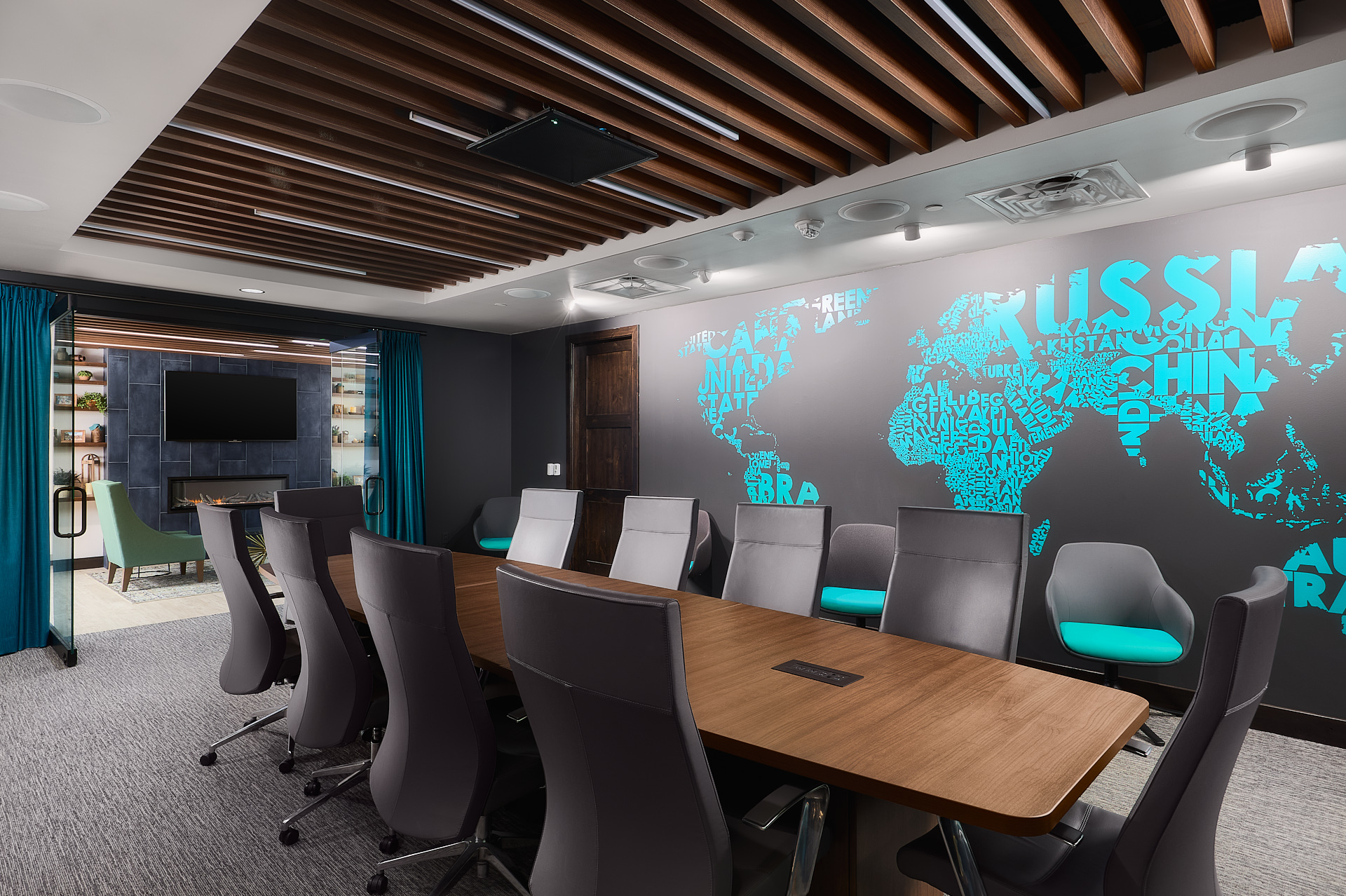
[Robin Pasley]: Vinyl applied to the wall, like what you see in our space here.
[Brian Werner]: Under $2,500, you're probably in the territory of office decor — even if it's part of your branding. Once you go over the $2,500 limit, you're probably looking at capitalizing and depreciating that item.
[Robin Pasley]: But if it's removable — meaning you can take it to your next space — where does that fall?
[Brian Werner]: If it's removable and you're moving it to a new space, you still own it, so it's depreciating. It's FF&E at that point.
[Randi Lynn Johnson]: Remind our listeners — what is FF&E?
[Robin Pasley]: Fixtures, furniture, and equipment.
[Brian Werner]: All the acronyms in the world. I ask that question all the time.
[Randi Lynn Johnson]: Good for you for being humble enough to ask. Are there mistakes people should avoid when claiming design-related expenses?
[Brian Werner]: Yes — just assuming everything can be written off and expensed right away. Anyone we work with, we always say: pick up the phone first, before a major redesign. We want to work directly with the interior designer and the client on what they're doing, what money is being invested, and then go through the associated rules. Can we expense it? Do we have to depreciate it? If so, can we get accelerated depreciation write-offs — bonus depreciation, Section 179 — that might be available? We want to be involved before the money starts being invested so we can plan appropriately.
[Randi Lynn Johnson]: What I'm hearing is: ask you early.
[Brian Werner]: Exactly. Call me first. The more knowledge people have before they start making decisions, the better. Major surprises usually result in people paying a lot more money to the government than they have to. Our philosophy is keeping as much money on Main Street as legally possible — because that benefits our community.
[Robin Pasley]: I love that approach.
[Randi Lynn Johnson]: That's why Colorado Springs is so great — because we have people like Brian helping all the business owners.
[Robin Pasley]: Brian, make sure people know how to contact you.
[Brian Werner]: We're located in downtown Colorado Springs. Our phone number is 719-358-2360. You can also email us at contactus@brwtax.com, or stop by our office at 523 South Cascade Avenue.
[Robin Pasley]: And it is beautiful. I had to come over just to see it.
[Brian Werner]: I say the same thing about your space to everybody.
[Randi Lynn Johnson]: Let's recap for our listeners. Number one: sit down with your CPA — ideally your CPA and your commercial interior designer together — so you know what will be deductible, what must be depreciated, and what the plan is before you make any major decisions. Robin?
[Robin Pasley]: Number two: everything that has to do with upgrading your space — furniture, construction expenses, anything that beautifies and improves your business interior design — is tax deductible in some form. That's great news, because we love helping people make the right investment in their space.
[Randi Lynn Johnson]: Brian, do you have a third one?
[Brian Werner]: Yes. For furniture and office equipment under $2,500, you can expense it right away. Anything above that, you'll have to capitalize it — but there may be accelerated depreciation write-offs available, like bonus depreciation and Section 179, so you can still effectively expense it even when technically depreciating. For larger items like construction, renovation, and structural improvements, you capitalize and depreciate, but some can be accelerated. Definitely work with your interior design firm and your CPA to make sure you've got a good game plan and know what to expect.
[Randi Lynn Johnson]: That's awesome. Thank you so much for your time today, Brian. We're going to have you back for more. If you have questions or want to contact Brian, all his contact information is in the show notes.
[Brian Werner]: Thank you for having me.
PASLEY COMMERCIAL INTERIORS is Colorado's trusted partner for growth-focused commercial interior design. As a woman-owned, NCIDQ-certified firm based in Colorado Springs, we blend spatial branding, client experience design, and turnkey interior solutions that help businesses make powerful first impressions and win their ideal clients. Our direct-to-manufacturer dealership simplifies the commercial furniture procurement process — reducing costs, cutting lead times, and delivering measurable ROI for every client. With deep expertise in workspace strategy, branded environment design, and commercial space planning, we transform business identities into client-converting spaces that inspire loyalty and drive revenue. From boutique and medical aesthetics buildouts to hospitality, multi-family, and franchise commercial projects, PASLEY COMMERCIAL INTERIORS delivers both impactful aesthetics and bottom-line results — because your space should work as hard as you do.
H.B. Pasley, Branding & Business Growth Advisor
616 N Tejon St
Colorado Springs, CO 80903
To request our complete Press Kit, call or schedule a conversation via our Contact Page.




.avif)
