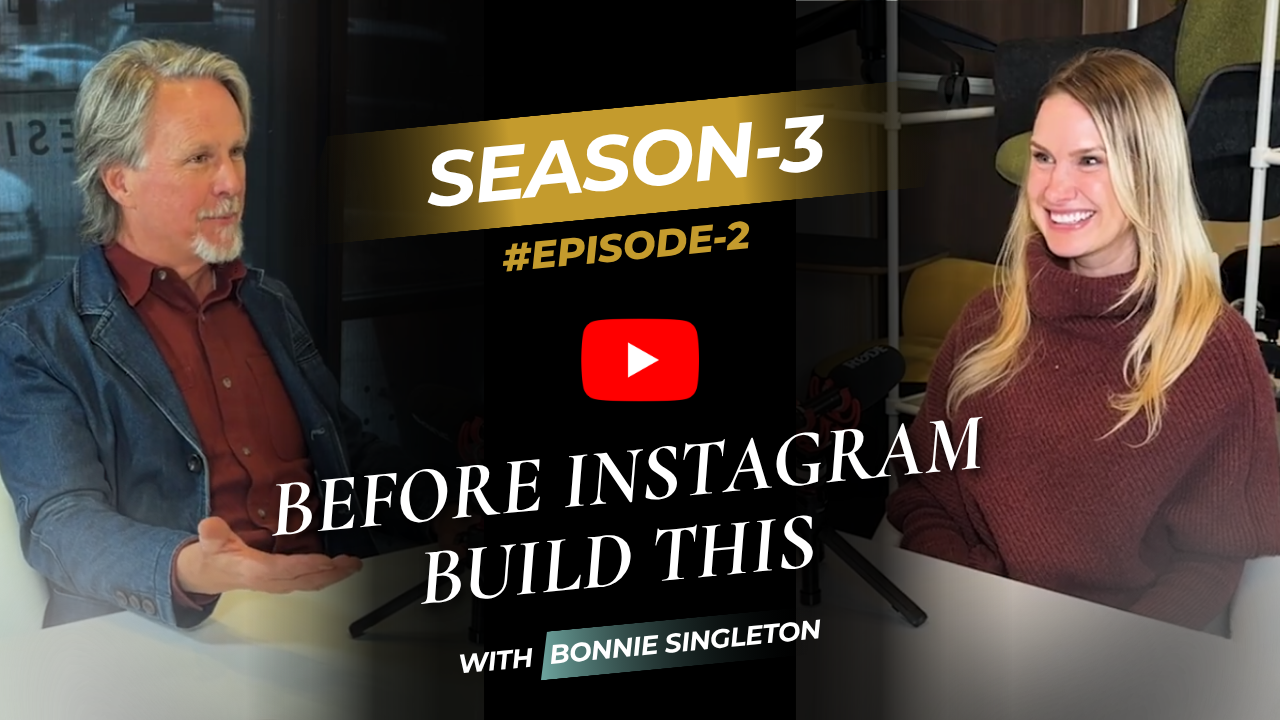
Before a hotel or restaurant posts a single image on Instagram, defining a clear brand story and ideal guest profile is the foundation of hospitality marketing that actually fills tables, beds, and calendars. H.B. Pasley and Bonnie of Pollinate Marketing walk through why most hospitality operators start in the wrong place — with tactics instead of identity — and how that gap quietly drains marketing budgets. The practical outcome for readers is a three-step brand audit and a single-sentence value proposition exercise that any hospitality team can complete today.
If You're Marketing to Everyone, You're Marketing to No One
Design to Help Your Business Grow — Pasley Commercial Interiors Podcast
Season 2026 | H.B. Pasley, Host | Guest: Bonnie Singleton, Pollinate Marketing
H.B.: If you weren't paying attention — or you stepped away to clean something in the kitchen — our guest just said something worth rewinding for.
Bonnie: If you're marketing to everyone, you're marketing to no one.
H.B.: Most business owners who come to us already know their brand is more than a logo and a color palette. They've gotten past that. What they're wrestling with is how to actually tell their story — because that's the only way to get to the word authenticity. You can't buy it, and you can't fake it. If you don't learn how to tell your story, you will never feel truly authentic in your marketing.
Welcome back to Design to Help Your Business Grow, the podcast from Pasley Commercial Interiors in Colorado Springs. I'm H.B. Pasley — founder, growth advocate, and your host. Today we're joined by Bonnie, owner of Pollinate Marketing — a hospitality-focused marketing firm that has become one of my favorite conversations of the 2026 season.
Bonnie, introduce yourself and tell us how you got here.
Bonnie: I own and operate Pollinate Marketing, and I got here by working in hotels and restaurants since I was fifteen. I went on to do marketing for a corporate restaurant group, then worked for Visit Colorado Springs. My whole career has been built inside the hospitality industry. Hotels and restaurants in particular are my people — I speak their language and they speak mine. It's the most energizing kind of marketing work I've found.
H.B.: I love that you grew up in your spot. My path was different — I sort of backed into helping people with branding and business growth. But I've loved hospitality my entire life. For me, it came through music. My wife Robin and I performed hundreds of concerts through the eighties and nineties, and what I learned performing live is that it's never just about the talent on the stage. It's about whether you can create an environment people cannot forget. That hour and a half has to be unforgettable.
That's the same magic we chase at Pasley Commercial Interiors. When Robin's commercial interior design expertise meets brand strategy and spatial branding — integrating a business's identity directly into its physical environment — what you get is the equivalent of a mini concert that a business gets to perform every single day for their guests.
Bonnie: That's exactly it. So much of hospitality is the choreography of a great show — the guest's arrival, the timing of the turn, the handwritten note on the pillow. The challenge is that when it comes to marketing, so much of that beauty gets lost in translation. The guest experience inside the space doesn't always make it out into how a hotel or restaurant presents itself digitally — from the first Google search all the way to the post-stay follow-up email. Those touchpoints should feel as intentional as the 12-minute appetizer cadence.
H.B.: What's the most common mistake hospitality clients make when they first come to you for marketing help?
Bonnie: They come in wanting Instagram posts. Someone told them they should be on Instagram — which is great, I love doing that work — but we need to back up a lot of steps before we post anything. We need to understand who you are as a business, what makes you different, and how to tell that story in a way that actually sets you apart. Especially in hospitality. I Googled hotels near me the night before my own wedding last year. I wasn't price shopping — I was experience shopping. I went to the booking sites, then to Instagram, then to the website. I was looking to feel something.
H.B.: That is the whole game right there. Differentiation. What made you choose the hotel you chose?
Bonnie: First — aesthetics. It had to be beautiful. That's actually what you all do. And then personality. I wasn't looking for an adventure-driven vibe or a stuffy experience. I wanted somewhere warm, beautiful, and unpretentious. And a brand's social media and website can show you that before you ever set foot through the door. That's the filter I was using.
H.B.: Every person who opens a search window has an internalized list of criteria — even if they couldn't write it down. They're not all shopping on price. They're not all looking for the big name brand. Some want a medical spa vibe. Some want a boutique hotel that feels hyper-local to Colorado. Some want a restaurant with a story they can tell their friends. The hospitality interior design and the brand story have to speak to that specific person — not everyone.
H.B.: Let's define something that I think confuses a lot of hospitality business owners: the difference between branding and marketing. Let's start with the ideal client, because both of our firms live and die by it. What happens to a hospitality business when they haven't clearly defined their ideal client?
Bonnie: If you're marketing to everyone, you're marketing to no one. Practically, what that means is your conversion rates get more expensive, your ads get more expensive, and it becomes harder to get anyone to take action — because you haven't shown them specifically why they should care about you. And you can only do that once you've chosen who you're talking to. Every hospitality operator wants everyone to book, dine, and come back. But there is a particular guest type who will tip well, treat your staff with respect, tell their friends, and come back. That's the person your marketing should be aimed at — because that's the person who drives the real success of your business.
H.B.: And if that isn't clarified, business owners are spending marketing dollars every year wondering why they're not attracting more of the guests they actually love. And when it doesn't work, who do they blame?
Bonnie: (laughs) The marketing agency.
H.B.: Exactly. Quick survey — what percentage of your clients come in too broad when it comes to describing their ideal client?
Bonnie: Most.
H.B.: And how many have never been asked the question at all?
Bonnie: Almost all of them.
H.B.: So you're performing a real service just by asking it. You may not be able to rifle-shot it on day one, but you can point the arrow in the right direction.
Here's my model. I call it the Archer Program because I like to name things. There's an archer, a bow, an arrow, and a target. The target is where the ideal client lives. The archer is the owner — the person carrying the why that drives the business. The reason this matters is that owners who are deeply in touch with their own story naturally attract a certain kind of client. They don't have to force it. But if they don't know their story — if they're chasing what the algorithm says or mimicking what a competitor hotel is doing — they'll never feel authentic. And you cannot fake authenticity. It either comes from your story or it doesn't come at all.
Bonnie: That makes total sense.
H.B.: Your natural gravity draws the right people to you. The moment you start telling your story instead of someone else's, the right clients start arriving — because they recognize themselves in what you're saying.
H.B.: Let's wrap with something practical. Who is your ideal client, Bonnie?
Bonnie: My ideal client is a heart-led business owner or key decision maker in hospitality. They want to fill tables, beds, and calendars — but they also want to feel a surge of pride when their business shows up in their Instagram feed or their website pulls up. They want to be reflected well.
H.B.: I love that. My ideal client is the owner who loves people — genuinely loves hosting humans, whether that's in a boutique hotel, a medical aesthetics practice, a restaurant, or an event venue. They've achieved a level of success where they know what they should do, but they don't have the time or the right partners to do it. They need an execution partner. For us, branding isn't just the look and feel — it's how you take your story and build a strategy that can actually be executed, consistently, over time.
H.B.: The client experience inside your space should tell the same story as everything outside it — that alignment is what hospitality interior design can make tangible, not just aspirational.
H.B.: Let's give people three things they can do right now. Bonnie, marketing first — go.
Bonnie: Step one: assess your marketing from the outside. Step outside your own role and look at your online presence the way a new guest would.
H.B.: Three questions to guide that audit. Number one — what is the imagery telling me? That takes courage to be honest about.
Bonnie: Number two — if I only read the headings, what story would they tell me?
H.B.: Number three — does all of this align with what we're actually trying to do?
Bonnie: Which implies you have a plan for what you're trying to do.
H.B.: (laughs) Fair. Now — branding. Three questions to assess where your brand stands right now.
One: Can you tell your own personal story — the why behind your business — to your team in a way that makes them feel it? Most business owners are deeply passionate, but their team never sees the why. Getting comfortable with your story is the first step. It's like the first step in recovery from having a brand that doesn't connect.
Two: Are you getting dressed in all the places that matter? Business owners spend a lot of time dressing their website. But are you dressed in your email tone? In the way your building looks from the street? In the way your team shows up every day? Your brand has to be consistent across every touchpoint — from the commercial interior design of your lobby to the subject line of your follow-up email.
Three: If I walked up to every person on your leadership and sales team and asked "What is your value proposition?" — would they all say the same thing? It doesn't have to be word-for-word identical. But the core message should be the same. If it isn't, you have a branding problem.
Bonnie: So what's the first step someone should actually take today?
H.B.: Write your value proposition on an index card. One sentence. No list. No conjunctions. One thing. Mine is: I deliver unforgettable experiences through branded design.
Bonnie: Mine is: We deliver identity-driven marketing that fills tables, beds, and calendars.
H.B.: Now send that question — just that question — to your entire leadership team. Give them 24 hours. When the answers come back, look at them. Are you all saying the same thing, or are you all over the map? That answer will tell you exactly where you stand — and whether you need a partner like Bonnie to help you get aligned.
H.B.: This was a great conversation. Where do people find you?
Bonnie: pollinatemarketing.com
H.B.: And we're at pasleycommercialinteriors.com — that's also the home of this podcast, along with articles, project galleries, and resources for hospitality and commercial interior design clients across Colorado. Bonnie, I hope we get to do this again.
This season we'll be talking with hoteliers, restaurant owners, event venue operators, medical spa owners, and more — all of the people who are in the business of hosting, caring for, and creating unforgettable experiences for other human beings. That's our world too. Thanks for kicking off the season with us.
Bonnie: Thanks for having me. This was so fun.
If you're ready to create an unforgettable experience for your clients, branded commercial interior design is your most powerful asset — because we don't do boring.
Design to Help Your Business Grow.
Pasley Commercial Interiors | pasleycommercialinteriors.com | Colorado Springs, CO
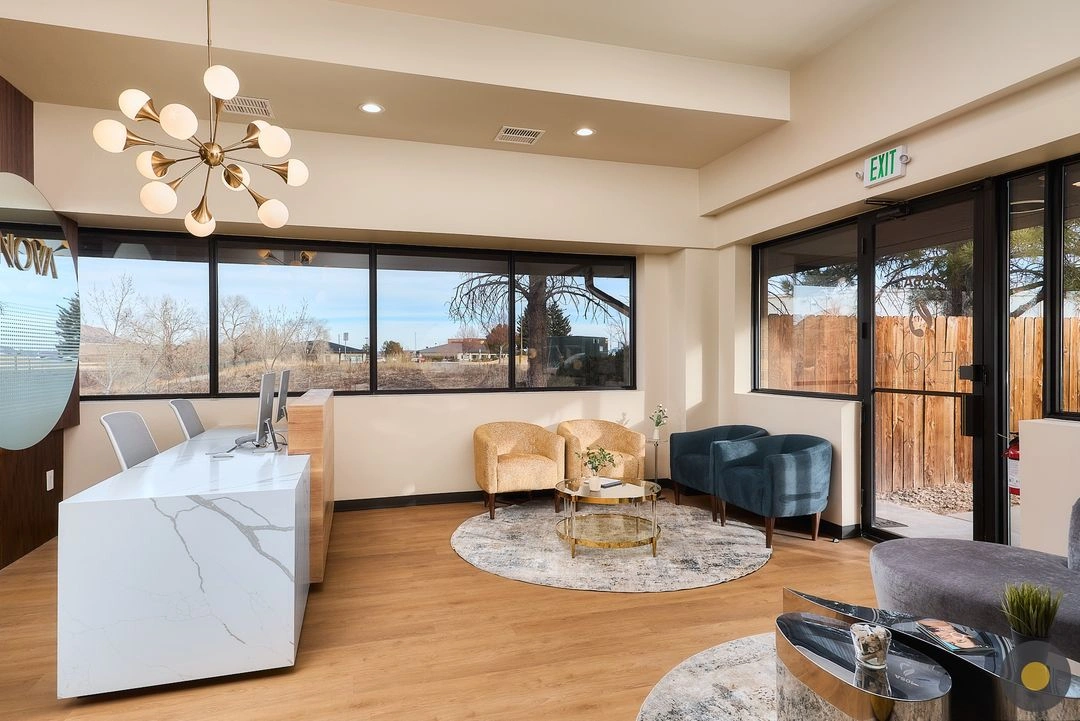
PASLEY COMMERCIAL INTERIORS is Colorado's trusted partner for growth-focused commercial interior design. As a woman-owned, NCIDQ-certified firm based in Colorado Springs, we blend spatial branding, client experience design, and turnkey interior solutions that help businesses make powerful first impressions and win their ideal clients. Our direct-to-manufacturer dealership simplifies the commercial furniture procurement process — reducing costs, cutting lead times, and delivering measurable ROI for every client. With deep expertise in workspace strategy, branded environment design, and commercial space planning, we transform business identities into client-converting spaces that inspire loyalty and drive revenue. From boutique and medical aesthetics buildouts to hospitality, multi-family, and franchise commercial projects, PASLEY COMMERCIAL INTERIORS delivers both impactful aesthetics and bottom-line results — because your space should work as hard as you do.
H.B. Pasley, Branding & Business Growth Advisor
616 N Tejon St
Colorado Springs, CO 80903
To request our complete Press Kit, call or schedule a conversation via our Contact Page.


.webp)
.avif)
